
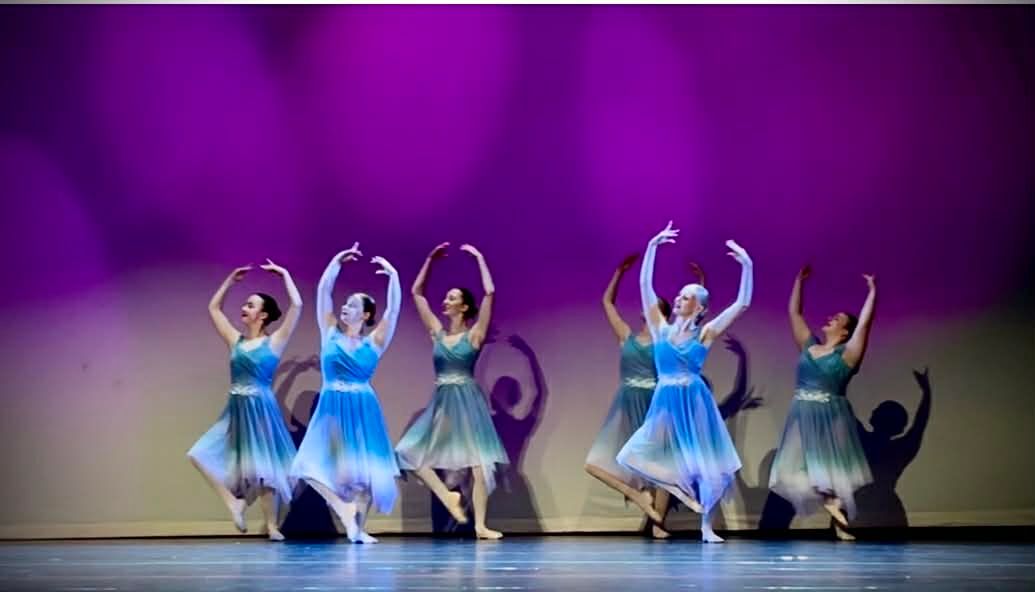
Standing in the wings of The Imperial Theatre during the opening night of The Nutcracker, the air feels different. It’s heavy with the scent of hairspray and stage makeup, but mostly, it’s thick with anticipation. I’ve watched hundreds of students stand in that exact spot, their hearts hammering against their ribs like trapped birds. Some are adjusting a tiara for the tenth time, while others are staring intently at the floor, mentally tracing the floor patterns of the Waltz of the Flowers.
Does the pressure ever go away? No. But does the way they handle it change? Absolutely.
In a world where kids are increasingly shielded from discomfort, performing arts education offers a rare, controlled environment where pressure isn't just an obstacle, it’s a teacher. At Great Lakes Dance Academy, we don’t just teach steps; we teach the architecture of resilience. Whether a student is in our recreational program or pursuing professional dance training in our Intensive Study (IS) track, they are learning how to breathe through the heat of the moment.
The Anatomy of a High-Pressure Moment
Pressure is a physiological response. The sweaty palms, the racing heart, the momentary "blank" in the brain, these are biological reactions to high-stakes situations. For a child, these sensations can be terrifying if they haven't encountered them before.
So, how do we fix that? We expose them to it in increments.
In our studios, pressure starts small. It’s the pressure of executing a clean triple pirouette in front of your peers. It’s the pressure of being the only one in the front row who remembers the transition to the floor. These are "low-risk, high-reward" moments. If you fall, the floor is still there. If you forget, your teacher is right there to guide you back.
But as students progress into our Intensive Study or Dance Company programs, the stakes evolve. They aren't just dancing for themselves anymore; they are dancing for the ensemble. They are learning that their technical precision directly impacts the safety and success of the group.

The Imperial Theatre: The Ultimate Training Ground
There is a massive difference between performing in a studio with mirrors and performing on the stage of The Imperial Theatre. Mirrors are a safety net. They allow you to self-correct in real-time. On stage, that safety net is gone. There is only the dark abyss of the audience and the blinding glare of the spotlights.
Every December, our dancers take on the challenge of The Nutcracker. It is a professional-level production with intricate costumes, complex sets, and a legacy that dates back over a century. For a ten-year-old playing a party guest or a teenager performing the role of the Snow Queen, the pressure is palpable.
And you know what? That’s exactly why we do it.
Performing in professional venues forces a child to realize that the show must go on. If a shoe ribbon comes undone or a prop is out of place, they can’t stop and ask for a "do-over." They have to solve the problem in the blink of an eye while maintaining their character. This is performing arts education at its most practical. It’s real-world problem-solving dressed up in tulle and sequins.

The "Pivot": Turning Panic into Performance
We talk a lot about the "pivot" at GLDA. In dance, a pivot is a literal turn, but in life, it’s the ability to change direction when things go sideways.
Have you ever seen a dancer trip and turn it into a floor roll? Or forget a step and improvise a beautiful port de bras until they find their place again? That isn't luck. It’s a cultivated skill.
When we look for dance schools in Sarnia, we shouldn't just be looking for who can teach the highest jump. We should be looking for who can teach a child how to fail and keep moving.
Pressure often leads to mistakes. That’s a reality of being human. But in the performing arts, we don’t treat mistakes as catastrophes. We treat them as data points. Did you miss the timing? Okay, adjust. Did you lose your balance? Re-center. This pragmatism strips the fear away from the pressure. It teaches kids that while they can’t always control what happens, they can always control how they react.
Transferable Skills: From the Stage to the Classroom
I often hear parents worry that too much time in the studio might detract from academics. I would argue the opposite.
A student who can stand in front of 600 people at The Imperial Theatre and nail a solo is not going to be intimidated by a high school chemistry presentation. A dancer who has spent years in professional dance training, learning to take constructive criticism and apply it instantly, is going to handle a tough performance review in their future career with grace.
The skills we foster are:
- Focus. The ability to tune out distractions and lock in on the task at hand.
- Poise. Carrying oneself with confidence, even when you feel anything but.
- Accountability. Knowing that your team (or your cast) is relying on you to show up and do your job.
- Grit. The stubborn refusal to quit when the choreography gets hard or the rehearsal days get long.
These aren't just "dance skills." They are "life skills."

The Community Factor
Handling pressure is significantly easier when you aren't doing it alone. One of the unique aspects of GLDA is our community. Whether it’s in our recreational classes or our Dance Company, our students are taught to support one another.
Backstage at the recital, you’ll see older students helping younger ones with their quick changes. You’ll hear whispers of "you’ve got this" and "squeeze your core" before a group heads out. This camaraderie acts as a buffer against stress. When a child knows they have a village behind them, the weight of the spotlight feels a little lighter.
We don't just want our dancers to be great performers; we want them to be great people. Character development is baked into every lesson we teach. We celebrate the "small wins" just as much as the big trophies because we know that the journey is where the growth happens.
Is the High-Standard Training Worth It?
Sometimes, parents ask if our standards are too high. They see the sweat, the repetition, and the rigorous attention to detail in our Intensive Study program and wonder: Is this too much for a kid?
My answer is always a blunt "No."
We aren't being rigorous for the sake of being "tough." We are being rigorous because we respect our students enough to give them the tools they need to succeed in a demanding world. If we lower the bar, we are doing them a disservice. We are telling them that they aren't capable of excellence.
When a student works hard to meet a high standard, they develop a sense of self-efficacy that no participation trophy can ever provide. They look in the mirror and think, "I did that. It was hard, and I did it anyway." That is the ultimate antidote to pressure.

A Note from the Director
I’ve spent my life in dance, and I’ve seen the transformative power of the stage time and time again. I’ve seen shy children who wouldn't speak in class grow into confident leaders. I’ve seen dancers face devastating injuries and return to the stage with more fire than before.
Pressure isn't something to be feared or avoided. It’s something to be harnessed.
If your child is ready to find their voice, build their strength, and learn how to shine when the lights are brightest, we’d love to have them in our studio. Whether they want to dance once a week or every day, there is a place for them here.
So, the next time your child feels those butterflies in their stomach before a big event: whether it’s a dance recital or a math test: remind them that those butterflies are just energy. And thanks to their time in the studio, they already know how to make them fly in formation.
Warmly,
Tia